

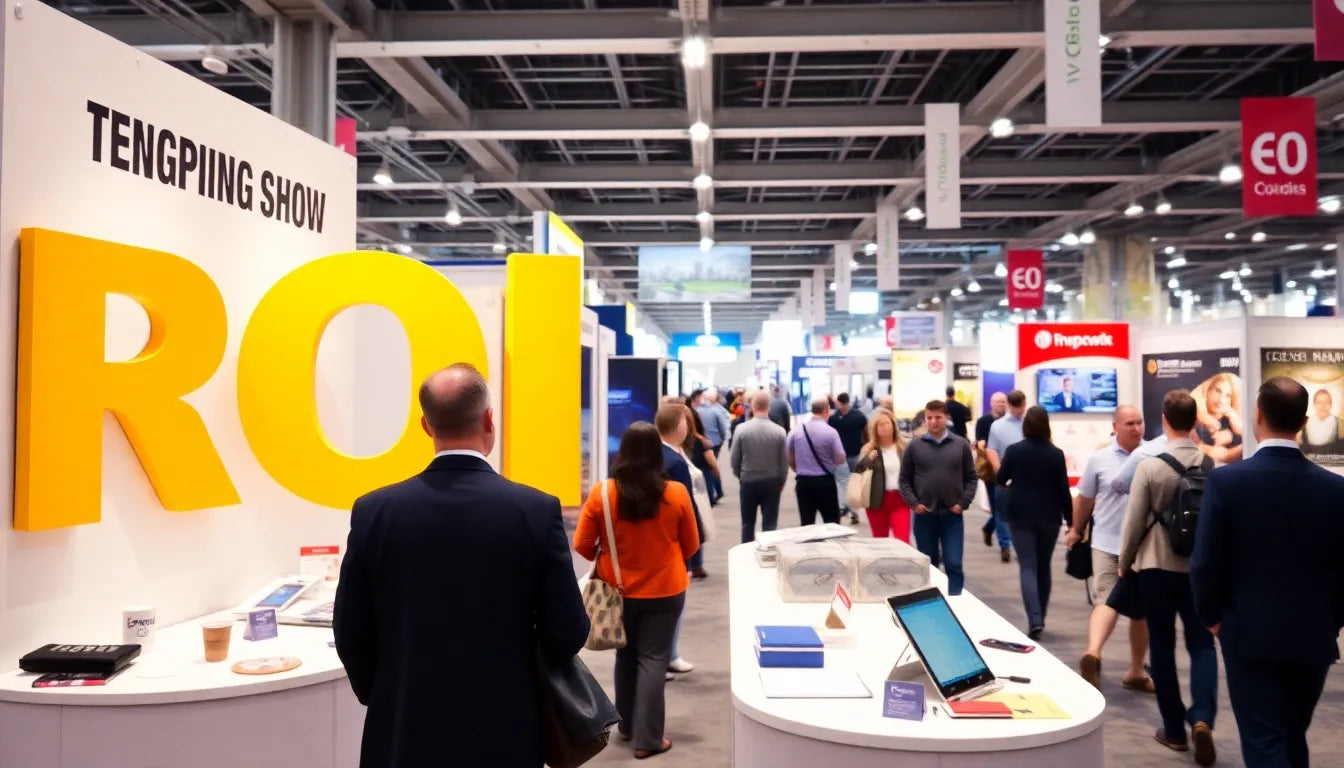
Curious if your latest trade show was really worth the investment? Understanding the right ROI metrics can give you clarity. From lead generation to sales growth, learn how to capture meaningful data—and see how a trade show ROI template keeps it all organized.
Why Measuring Trade Show ROI Matters
Exhibiting at trade shows can involve significant cost—booth rentals, travel, marketing, and staff time quickly add up. But were those resources well spent? Calculating return on investment (ROI) isn’t just about justifying costs—it helps you identify what’s working, spot opportunities, and make better decisions for your next event.
Using a trade show ROI template gives structure to your analysis, ensures consistency, and helps focus your team’s efforts on measurable outcomes, not just impressions or “buzz.” By adopting a systematic approach, you can prove the real value of every trade show and refine your strategy for future success.
Key Trade Show ROI Metrics to Track
To get a complete picture, it’s essential to look beyond just sales. Here are the most valuable trade show ROI metrics and how a trade show ROI template supports capturing them:
1. Total Leads Captured
Counting new contacts is one of the simplest and most actionable trade show ROI metrics. Leads can be gathered via badge scans, business cards, signup sheets, or digital forms.
- Track both quantity and quality.
- Segment leads by interest level or readiness to buy.
- Record source (e.g., booth visitor, seminar attendee, networking event).
A good trade show ROI template provides fields for capturing this detailed lead information and can help distinguish between “hot,” “warm,” and “cold” prospects.
2. Cost per Lead
Breaking down your total spend by the number of leads captured gives a clear cost per lead (CPL) figure. This metric helps you compare trade show performance against other marketing channels.
- CPL = Total event cost / Number of leads.
- Compare with previous trade shows or other campaigns.
Knowing your CPL can justify the investment or indicate when to try a different approach.
3. Meetings and Demo Requests
Not every trade show conversation is equal. Tracking the number of meetings or demo requests allows you to measure deeper engagement levels.
- Log all scheduled appointments and ad-hoc demos.
- Track each outcome and follow up post-show.
Your trade show ROI template should have sections to log meetings, allowing later analysis of which interactions turned into sales.
4. Opportunities Generated
Assess how many leads progressed deeper into the sales funnel. An “opportunity” might mean a quote request, a proposal sent, or a meeting resulting in a potential sale.
- Count all significant, qualified sales opportunities.
- Track their current sales stage and future movement.
This is one of the most telling trade show ROI metrics, demonstrating not just activity, but real business potential.
5. Revenue Attributed
Ultimately, how much revenue can be directly linked back to the trade show? This takes time to measure, as deals often close weeks or months afterward.
- Attribute sales to trade show leads using codes, tags, or CRM notes.
- Sum total sales closed because of trade show engagement.
- Calculate the ratio of total costs to revenue attributed.
Your trade show ROI template should allow ongoing updates as deals close.
6. Return on Objectives (ROO)
While not purely monetary, measuring progress on business objectives—like brand awareness, product launches, or partner meetings—adds depth to your analysis.
- Set clear, measurable goals before the event.
- Use post-event surveys, social listening, or media tracking to gauge success.
Combine return on objectives with straightforward ROI calculations for a fuller view.
7. Customer Acquisition Cost (CAC)
Beyond lead cost, what does it cost to actually win a customer from a trade show? Calculating CAC provides an efficiency measure for your sales process post-show.
- CAC = Total event cost / Number of new customers acquired.
- Use CRM to confirm which leads became paying customers.
A trade show ROI template helps connect the dots from first engagement to closed business.
8. Booth Traffic Analytics
Foot traffic matters, especially if awareness or engagement are top goals. Using badge scanners or trackers, tally total booth visitors.
- Compare booth visits year-over-year or by event type.
- Relate traffic numbers to leads captured and demos given.
If you invest in a larger or more central booth, this metric shows if the cost translates to additional interest.
9. Engagement Metrics
Digital touchpoints are increasingly relevant, even at in-person shows. Track engagement across your digital assets:
- Social media mentions and hashtag use.
- Mobile app or landing page visits.
- Downloads of event materials or brochures.
Include these on your trade show ROI template—they highlight the reach and resonance of your message.
How to Build a Trade Show ROI Template
With so many moving parts, a structured trade show ROI template becomes a must-have tool. Start with a simple spreadsheet or digital dashboard organized into these sections:
- Event details: Dates, location, objectives, team.
- Attendee and lead capture stats, segmented by type.
- Direct costs: booth fees, travel, lodging, shipping, marketing.
- Indirect costs: staff time, prep work, follow-up.
- Meetings, demos, and follow-through activities.
- Sales pipeline updates linked to leads and opportunities.
- Final revenue tallies, cost per lead, customer acquisition numbers.
- Qualitative objectives and outcomes.
A well-designed trade show ROI template turns raw data into actionable insight. By updating metrics before, during, and after the show, you’ll always know your true performance.
Best Practices for Maximizing and Measuring Trade Show ROI
Tracking numbers is only half the battle. Here are practical tips to ensure your trade show ROI template delivers value:
- Set clear, measurable objectives before the event.
- Assign ownership of lead capture and follow-up.
- Record all expenses as they happen—no guesswork after the event.
- Use CRM integration to link leads to outcomes.
- Review performance together in a post-event debrief.
- Compare metrics across time to reveal trends and improvement opportunities.
Customizing your template to your unique business needs can reveal surprising strengths—or weaknesses—in your event strategy.
Common Mistakes When Calculating Trade Show ROI
Avoid these pitfalls to get accurate, actionable metrics:
- Missing indirect costs like staff hours or prep work.
- Delayed or incomplete data entry, leading to lost leads.
- Ignoring long-term sales that originate at the trade show.
- Focusing only on quantity, not lead quality.
- Forgetting to follow up after the event.
Using a comprehensive trade show ROI template averts these common problems and creates a more reliable reporting process.
Real-World Example: Applying a Trade Show ROI Template
Imagine your company spends $25,000 on a regional trade show. As per your trade show ROI template:
- You collect 350 leads—with 50 marked as high quality.
- 30 demo appointments are set up during the event.
- 10 of these result in proposals, and by six months later, 3 deals are closed, totaling $45,000 in new revenue.
- Booth traffic increased 20% from last year.
- Social engagement around your event hashtag tripled.
With all this data collected in your template, your team easily calculates cost per lead ($71), customer acquisition cost ($8,333), and overall ROI (80% return). Rather than guessing, you’ve got clear, actionable numbers—or warning signs on where improvement is needed for next time.
Conclusion
Measuring the impact of every event means more than counting business cards. By using a dedicated trade show ROI template and tracking a range of meaningful metrics, you’ll understand your results, refine your approach, and maximize your future returns. Start tracking, and turn every trade show into a springboard for growth.



Share:
Trade Show Banner Display Types
How to Show a Sense of Urgency to Trade Show Prospects (Without Pressure)